Step by step guide to the volleyball forearm pass

Introduction
The forearm pass, commonly known as the "bump," is one of the most fundamental skills in volleyball. It is a defensive and transitional technique used to control the ball when it is served, spiked, or dropped low to the floor. Mastering this move is essential because it provides the foundation for almost every successful offensive play, as a precise pass allows the setter to distribute the ball effectively to hitters.
A reliable forearm pass ensures stability and control within a team's rotation. Without the ability to absorb the impact of a fast-moving ball and direct it toward a specific target, a team will struggle to maintain rallies. Whether you are a beginner learning the basics or an intermediate player refining your precision, understanding the biomechanics of the forearm pass is critical for improving your overall game performance.
Importance of the forearm pass in gameplay
In volleyball, the forearm pass serves as the primary tool for "digging" an opponent's attack and receiving serves. While setting is used to direct the attack, the forearm pass is what keeps the ball in play during high-velocity situations. When a player receives a powerful serve, they cannot use their fingertips; they must rely on the large surface area provided by their forearms to cushion and redirect the energy.
Beyond defense, the forearm pass is a vital tool for transition play. A well-executed pass allows a team to move from a defensive posture into an offensive setup. By directing the ball toward the setter's position with accuracy, the passer dictates the tempo of the game. This skill minimizes errors, reduces the pressure on the setter, and increases the chances of a successful kill.
Proper hand positioning and platform formation
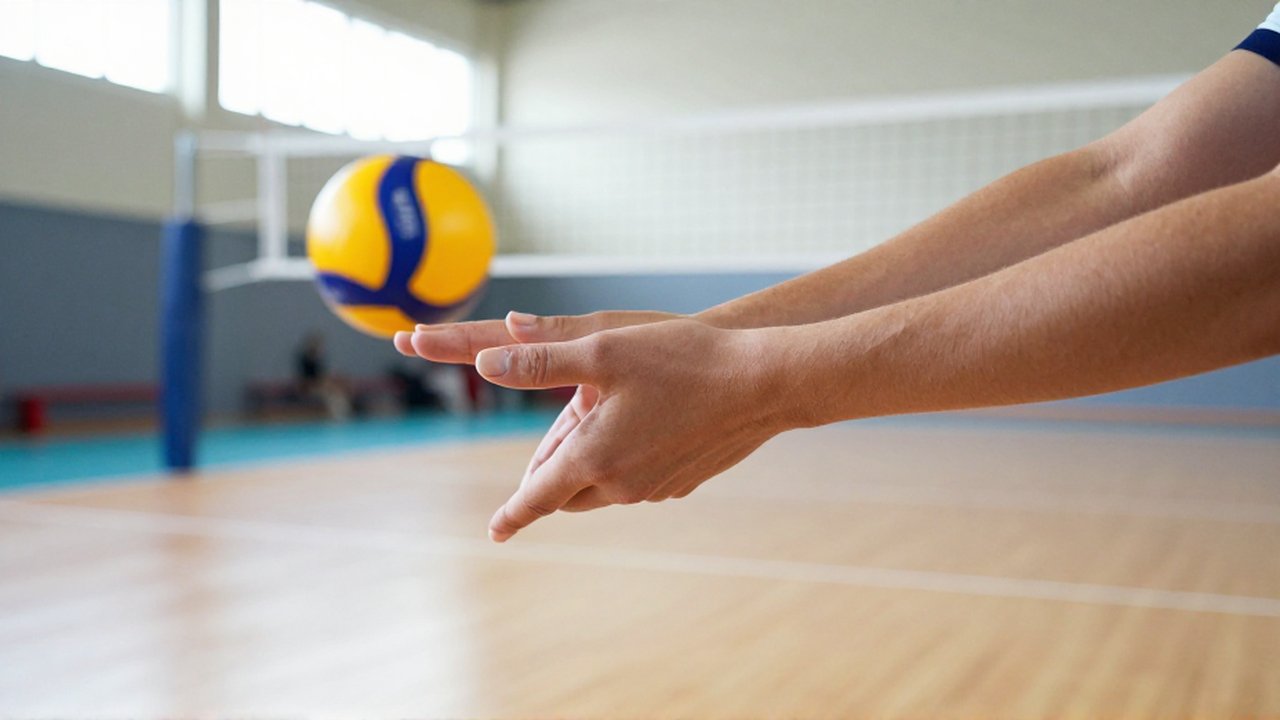
The "platform" is the flat surface created by your forearms, and it is the most important technical aspect of the pass. To create an effective platform, you must first join your hands correctly. Avoid interlocking your fingers, as this can lead to injury and prevents a stable surface. Instead, place one palm inside the other and tuck your thumbs side-by-side, pointing them toward the ground.
Once your hands are locked, you must extend your arms fully so that the impact occurs on the fleshy part of your forearms, just above the wrists. Keep your elbows locked to ensure a rigid, flat surface. If your elbows bend upon impact, the ball will lose direction and momentum. A wide, stable platform allows you to "angle" the ball toward your target by tilting your arms rather than swinging them.
Body positioning and footwork fundamentals
A successful pass starts from the ground up. You should never attempt a forearm pass while standing completely upright or with your weight on your heels. Instead, adopt an athletic stance: keep your feet wider than shoulder-width apart, one foot slightly ahead of the other, and bend your knees to lower your center of gravity. This position allows you to react quickly to the ball's trajectory.
As the ball approaches, move your feet to get directly behind or slightly to the side of the ball. You want your body to be centered so that the pass is directed through your midline. Using your legs to provide power is a key distinction between advanced players and beginners. Instead of swinging your arms wildly, use a controlled motion from your legs to "push" the ball toward the target.
Step by step execution guide

To execute a consistent forearm pass, follow these sequential steps during a drill or a real match:
- Track the ball: Watch the ball from the moment it leaves the opponent's hands. Track its flight path to predict where it will land.
- Move to the spot: Use quick, short steps to position your body so the ball is centered in front of your midsection.
- Prepare the platform: Bring your arms together, lock your elbows, and tilt your platform toward the intended target (usually the setter).
- Absorb and redirect: As the ball makes contact with your forearms, slightly shrug your shoulders to stabilize the impact. Do not swing your arms above your waist.
- Follow through with the legs: Use a gentle extension of your knees to provide the lift needed to reach the target, maintaining a steady and calm upper body.
Common mistakes to avoid
Many players struggle with the forearm pass due to a few recurring technical errors. One of the most common mistakes is "swinging the arms." When players feel they lack power, they often swing their arms upward toward the ceiling. This causes the ball to fly backward or lose all control. Remember that power should come from the legs, while the arms act as a controlled directional guide.
Another frequent error is failing to use the legs or standing too tall. If you remain upright, you cannot absorb the force of a hard hit, causing the ball to bounce wildly off your arms. Additionally, "clasping" or interlocking fingers can be dangerous. If a heavy ball hits interlocked fingers, it can cause wrist or finger injuries and results in an uneven contact surface, making a controlled pass nearly impossible.
Frequently asked questions
Where on my arms should the ball make contact? The ball should contact the flat, fleshy area of your forearms, approximately two to four inches above your wrists. Avoid letting the ball hit your hands or your elbows.
Should I swing my arms to get the ball over the net? No. Swinging your arms causes a loss of control. You should use your legs to provide upward momentum and use your platform to angle the ball toward your target.
How do I prevent the ball from flying too far backward? Ensure your thumbs are parallel and pointing down, and keep your elbows locked. If the ball flies backward, you are likely swinging your arms too high or failing to tilt your platform forward.
Why does my pass always go sideways? This usually happens because your platform is not level or your body is not square to the target. Make sure your shoulders are pointing toward your target and your arms are even.
Leave a Reply