How to perform a proper volleyball spike technique

Introduction
The volleyball spike, also known as an attack or kill, is the most aggressive and decisive offensive maneuver in the sport. It involves a player jumping high at the net to hit the ball forcefully over the opponent's court, aiming to ground it before the defense can react. Mastering this technique is essential for any player looking to transition from a defensive mindset to an offensive powerhouse, as it serves as the primary method for scoring points in competitive play.
Executing a successful spike requires more than just raw strength; it demands a sophisticated combination of timing, footwork, core stability, and arm swing mechanics. When performed correctly, a spike can bypass even the strongest blocks and penetrate deep into the opponent's territory. Because it is a complex, high-velocity movement, understanding the breakdown of each phase is crucial to prevent injury and ensure the ball travels with precision rather than just speed.
Importance of the approach and footwork
The foundation of a powerful spike does not begin in the air, but on the floor. The approach is a rhythmic series of steps that converts horizontal momentum into vertical explosion. Most players utilize a three-step or four-step approach to build this energy effectively. A standard approach typically begins with a small step to establish direction, followed by a rapid penultimate step that is longer and serves to plant the body, and finally a quick final step to bring the feet together and launch the jump.
Proper footwork ensures that the hitter approaches the net at the correct distance. If the hitter is too close, they will lose the ability to swing their arm freely; if they are too far, they will lose power and timing. Rhythm is the most critical element here. The steps should accelerate as the player nears the net, creating a "loading" effect in the legs that prepares the body for takeoff.
Mechanics of the jump and mid-air positioning
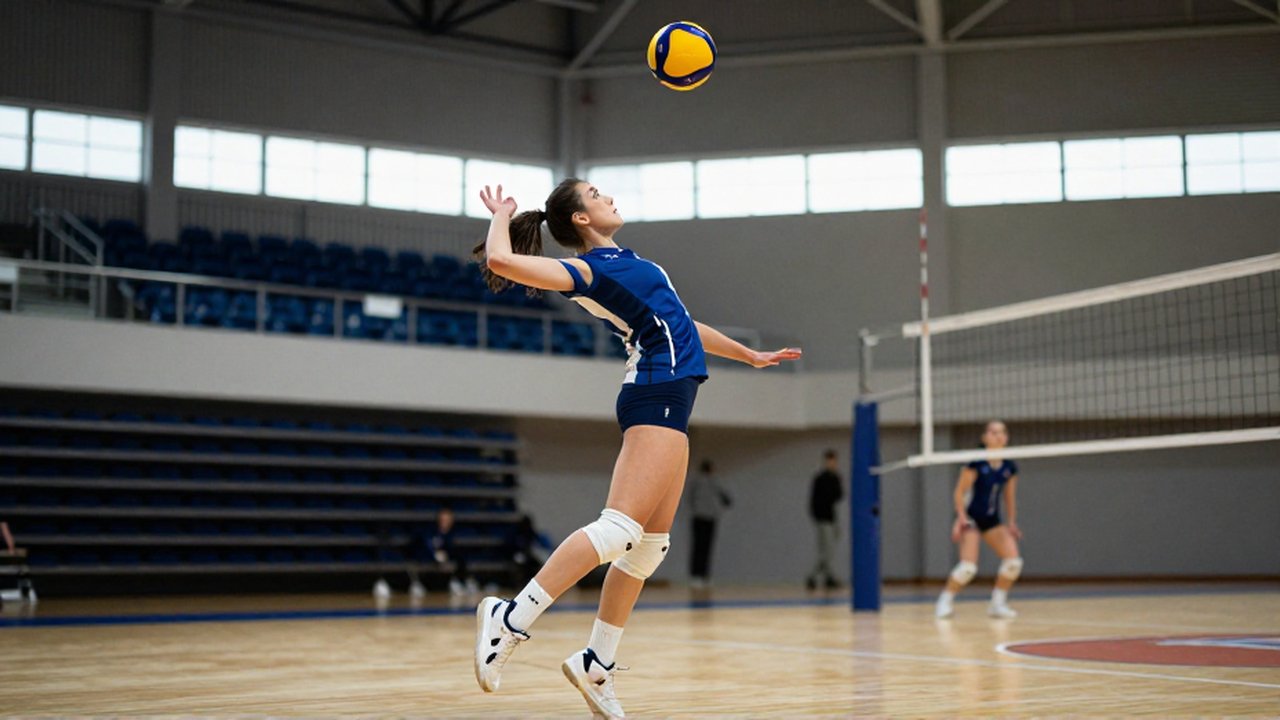
Once the approach is completed, the player must transition from horizontal movement to a vertical leap. This is achieved by driving the arms upward forcefully during the final steps of the approach. As the player leaves the ground, the body should be in a controlled, upright position. Using the arms as levers helps maximize the height of the jump, which is vital for hitting over the opponent's block.
While in the air, the hitter must maintain core engagement to stabilize the torso. A common mistake is leaning too far backward, which results in a "looping" hit that goes out of bounds. Instead, the player should aim to stay slightly in front of the ball, allowing the body to arch slightly in a "bow and arrow" position. This muscular tension prepares the hitting arm to snap forward with maximum velocity.
Execution of the arm swing and contact
The arm swing is the climax of the spiking process. It begins with a "draw," where the hitting arm is pulled back behind the head, elbows high and palm facing away from the body. Simultaneously, the non-hitting arm (the guide arm) should be pointed toward the ball to assist with balance and tracking. This creates a torque effect through the torso that adds significant speed to the swing.
When contacting the ball, the player should aim for a high point of contact. Contact must be made with a firm, open palm, snapping the wrist downward immediately after impact. This wrist snap is what directs the ball steeply into the court and provides the necessary "topspin" to make the ball dive. Hitting the ball with a flat hand or a bent wrist often leads to errors in direction and a lack of control.
Common mistakes and how to avoid them

Even experienced players can fall into technical traps that diminish the effectiveness of their attack. Recognizing these errors is the first step toward correction:
- Poor timing: Attempting to hit the ball too early or too late relative to the set. This usually results from a lack of synchronization between the approach and the setter's movement.
- Lack of arm swing extension: Not fully extending the arm during the hit, which leads to a weak, "pushing" motion rather than a powerful "striking" motion.
- Landing instability: Landing on one foot or with locked knees. This significantly increases the risk of ankle and knee injuries. Always aim to land on both feet with slightly bent knees to absorb the impact.
- Hitting into the net: Aiming too low or failing to jump high enough, causing the ball to strike the tape of the net.
Benefits of mastering the spike
A well-executed spike offers several advantages beyond just scoring. It puts immediate psychological pressure on the opposing team's defense, forcing them to stay reactive rather than proactive. Furthermore, a technically sound spike allows a player to vary their shots, such as hitting "line," "cross-court," or performing a "tip" (a soft touch) when the block is too strong. Developing this skill enhances overall court awareness and physical conditioning, specifically regarding explosive power and coordination.
Frequently asked questions
How can I increase my vertical jump for spiking? Focus on plyometric training, such as box jumps and depth jumps, combined with strength training for the quadriceps, glutes, and calves. Core strength is also essential for maintaining stability during the jump.
What is the best way to practice my timing? Work on repetitive drills with a setter. Start with a stationary ball to master the arm swing, then move to controlled tosses, and eventually transition to live sets to synchronize your approach with the ball's trajectory.
Why does my spike consistently go out of bounds? This is often caused by hitting the ball when it is too far behind your head or by not snapping your wrist downward upon contact. Ensure you are meeting the ball in front of your hitting shoulder.
Can I spike if I am not the tallest player on the court? Yes. While height is an advantage, technical proficiency—specifically approach speed, jump timing, and wrist snap—can allow shorter players to compete effectively against taller opponents.
Leave a Reply