Essential gear for night running safety

Introduction
Night running offers a unique opportunity for athletes to escape the heat of the day and utilize quieter streets or trails. However, transitioning from daylight to darkness introduces significant visibility challenges that can compromise a runner's safety. Being visible to motorists, cyclists, and even pedestrians is the most critical factor in preventing accidents and ensuring a secure training session.
Investing in the right gear is not merely about aesthetics; it is a functional necessity for risk mitigation. Proper equipment ensures that you are not just able to see the path ahead, but more importantly, that you are seen by others from a distance. This article outlines the fundamental tools required to transform a potentially hazardous nighttime run into a controlled and safe exercise.
High visibility clothing and accessories
The primary goal of night running gear is to maximize contrast against dark backgrounds. Standard dark-colored athletic wear becomes almost invisible under streetlights or in unlit areas. To combat this, runners should prioritize clothing that incorporates retroreflective materials. These materials catch and bounce light directly back to the source, such as car headlights, making the runner appear to glow.
Reflective vests, armbands, and ankle bands are highly effective because they place light-reflective surfaces on the moving extremities. When a driver sees a rhythmic flash of light from an arm or leg, their brain quickly identifies the movement as a human being. Short of a full reflective kit, wearing bright, neon colors like lime green, orange, or hot pink can provide a secondary layer of visibility, even if the light is not direct.
Lighting solutions for the path ahead
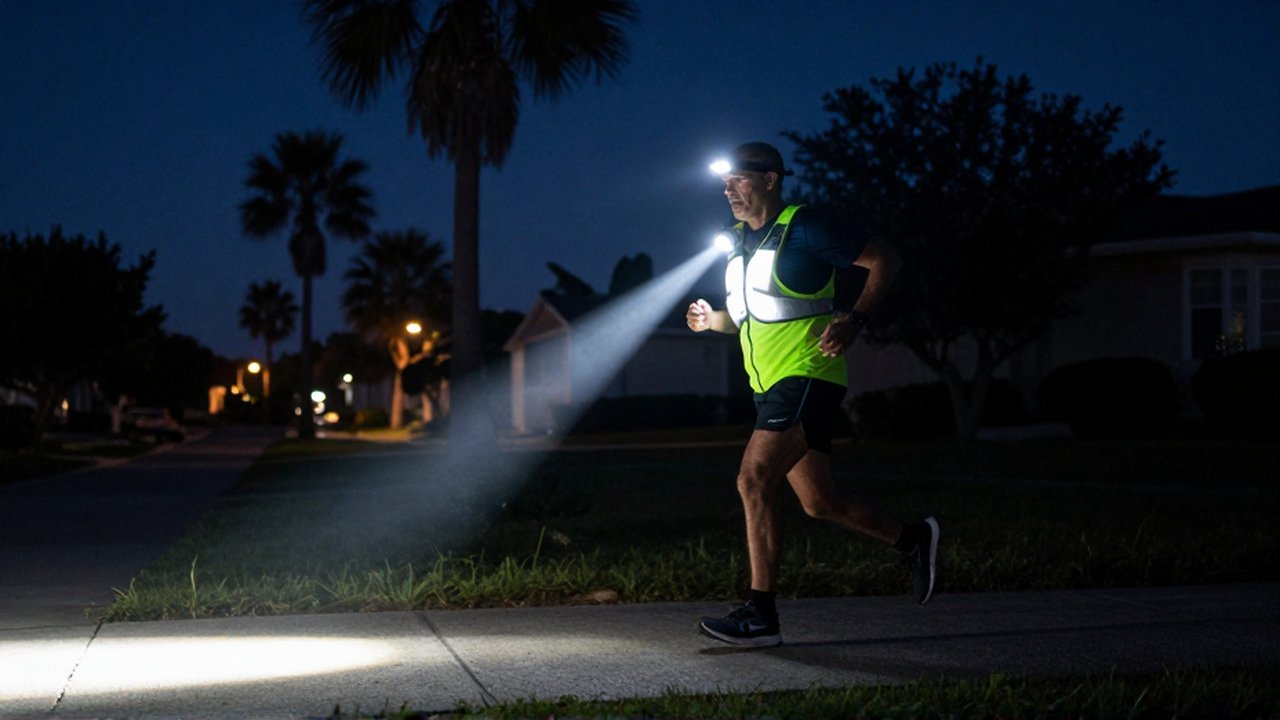
While being seen is vital, being able to see the terrain is equally important to prevent trips, falls, and ankle injuries. The type of lighting you need depends largely on whether you are running on paved urban sidewalks or unlit natural trails.
For road runners, a high-quality headlamp is often the most convenient option. By mounting the light on your forehead, the beam stays directed on the path regardless of where you turn your head. This allows for hands-free movement and ensures that shadows do not obscure obstacles like curbs or potholes. For trail runners, a more powerful headlamp with a wider beam is necessary to navigate uneven ground, roots, and rocks.
If you are running in a highly populated urban area, a small chest light can also supplement a headlamp, providing a lower light source that helps define the depth of the ground. Avoid relying solely on a smartphone flashlight, as these are rarely bright enough to illuminate a safe running path and can be difficult to hold while maintaining a running gait.
Safety tools and communication devices
Beyond visibility and illumination, personal safety involves being prepared for unexpected situations. Carrying a small, handheld light or a specialized safety whistle can provide an extra layer of security. A whistle is a low-tech but highly effective tool for signaling for help if you encounter an obstacle or feel unsafe.
Mobile devices are essential for communication, but they should be used with caution. Keeping a phone in an armband or a secure running belt ensures it is available for emergencies without being a distraction. It is always wise to inform someone of your planned route and your expected return time when training after dark.
Summary of essential night running gear

| Gear Category | Primary Function | Recommended Items |
|---|---|---|
| Visibility | Being seen by vehicles | Reflective vests, clip-on lights, neon apparel |
| Illumination | Seeing the terrain | Headlamps, chest lights, handheld torches |
| Personal Safety | Signaling and communication | Safety whistles, smartphone in secure belt |
Common mistakes to avoid
One of the most frequent errors is relying on a single source of light. If a headlamp battery dies mid-run, the runner is left in total darkness. Always carry a backup light source or ensure your primary device has sufficient battery life for the entire duration of your workout.
Another mistake is neglecting the environment. Even with the best gear, running in areas with poor lighting or high traffic density at night carries inherent risks. It is better to choose well-lit, populated paths than to attempt a shortcut through an unlit park or a secluded alleyway. Finally, do not assume that because you have lights, drivers will see you. Always maintain situational awareness and remain vigilant of your surroundings.
Frequently asked questions
How often should I check my gear before a night run? You should check your gear every single time you run. Specifically, test your headlamp to ensure the battery is charged and inspect your reflective clothing for any signs of wear or fading that might reduce its effectiveness.
Is it better to use a headlamp or a handheld light? A headlamp is generally preferred because it provides hands-free illumination that follows your gaze, which is safer for navigation. Handheld lights are useful as backups but can interfere with your natural running form.
Can I use regular bright-colored clothes instead of reflective gear? While bright colors like neon yellow help in some light, they are not a substitute for reflective materials. Reflective gear is specifically designed to interact with light sources like headlights, which is crucial for being seen in low-light conditions.
Should I wear headphones while running at night? It is highly recommended to keep the volume low or use bone-conduction headphones. Maintaining situational awareness is critical at night; you must be able to hear approaching vehicles, cyclists, or other environmental cues.
Leave a Reply