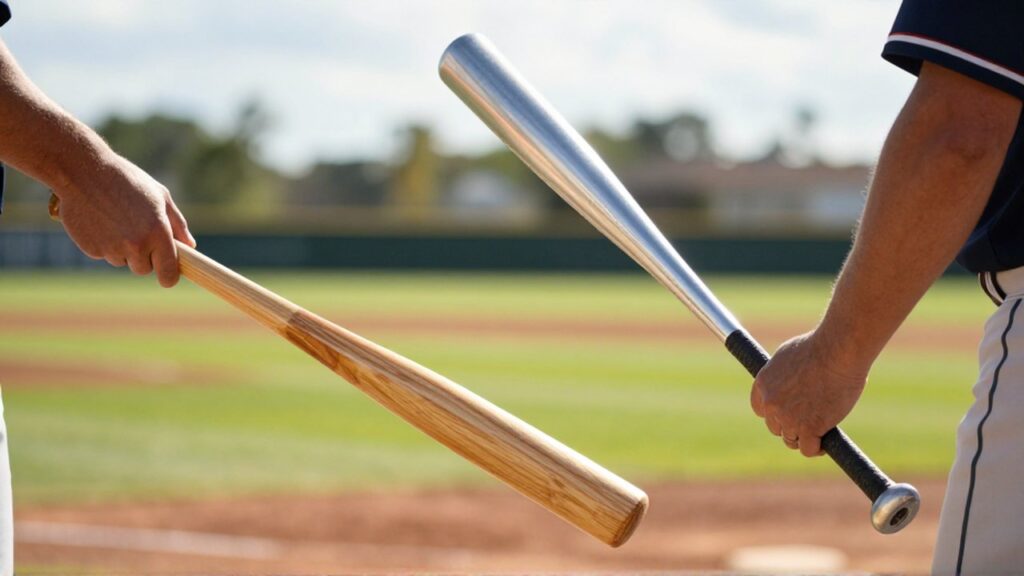
Comparison between wood and aluminum baseball bats
Introduction
Selecting the right equipment is a fundamental decision for any baseball player, as the choice of bat significantly influences performance, contact quality, and personal development. While the game revolves around hitting a ball with a stick, the material used to construct that stick—either natural wood or engineered aluminum—changes the mechanics of the swing and the physics of the impact. Understanding these differences is essential for players transitioning through different levels of competition, from youth leagues to professional ranks.
The debate between wood and aluminum often centers on the balance between power and durability. Wood bats are the standard for professional play, requiring precise timing and skill due to their smaller "sweet spot." In contrast, aluminum bats are widely used in amateur and youth leagues because they offer easier contact and higher exit velocities. Choosing between them depends on your current skill level, the specific rules of your league, and your long-term training objectives.
Key differences in performance and feel
The most immediate difference between wood and aluminum bats is the "feel" upon contact. Wood bats, typically crafted from ash, maple, or birch, possess a natural density that provides a distinct vibration and feedback. This feedback is vital for advanced players to sense exactly where the ball hit the barrel. However, if the ball is struck outside the center of the bat, the vibration can be jarring, sometimes causing discomfort in the hands.
Aluminum bats are hollow, which creates a significantly different tactile experience. Because they are made of metal alloys, they tend to have a much larger sweet spot. This means players can achieve high-quality contact even if their swing is slightly off-center. The physical sensation is often more dampened than wood, making it more forgiving for beginners. Furthermore, the "trampoline effect" in aluminum bats—where the barrel momentarily compresses and recoils—allows for much higher ball speeds compared to the solid mass of a wood bat.
Impact on skill development and training

For players focusing on long-term growth, the choice of material serves as a training tool. Using a wood bat is often considered the gold standard for developing elite hitting mechanics. Because wood is less forgiving, it punishes poor swing paths and improper timing. This forces the hitter to focus on discipline, hand-eye coordination, and precise contact. Many coaches recommend wood bats during practice to ensure that players do not become overly reliant on the easy contact provided by metal.
Aluminum bats, while excellent for boosting confidence and increasing offensive production in games, can sometimes mask technical flaws. A player might successfully drive a ball using an aluminum bat despite having a suboptimal swing, which can hinder their progression when they eventually move to higher levels of play. Therefore, the decision often involves a trade-off between immediate results in a game and the rigorous refinement of technique.
Durability and maintenance requirements
When comparing the longevity of these two options, aluminum generally holds the advantage in terms of overall lifespan. Aluminum bats are designed to withstand hundreds of high-velocity impacts without breaking. While they can suffer from dents or structural fatigue over a long period, they do not "snap" like wood. This makes them a more cost-effective choice for recreational players or teams with limited budgets.
Wood bats are inherently more fragile. They are prone to splintering, cracking, or breaking entirely after significant use or if hit improperly. A single mishit can end the life of a high-quality maple bat. Because of this, wood bats are often viewed as consumable equipment that requires regular replacement. Players must also be mindful of environmental factors, such as moisture or temperature changes, which can affect the integrity of the wood fibers over time.
Comparison overview

| Feature | Wood Bats | Aluminum Bats |
|---|---|---|
| Sweet Spot | Small and precise | Large and forgiving |
| Feedback | High vibration/tactile sensing | Dampened vibration |
| Ball Speed | Traditional/Lower | Higher (Trampoline Effect) |
| Durability | Lower (prone to breaking) | Higher (resistant to breakage) |
| Primary Use | Professional/Skill development | Youth/Amateur leagues |
Common decision factors for players
To decide which bat is right for a specific situation, players and coaches should consider the following criteria:
- League Regulations: Many youth and collegiate leagues have strict rules regarding the "Performance Standard" of aluminum bats. Some leagues prohibit metal bats entirely, while others require specific certifications.
- Skill Level: Beginners often benefit from the confidence-building properties of aluminum, whereas advanced players use wood to fine-tune their precision.
- Budget: Aluminum bats generally offer better value for players who need equipment that lasts an entire season without replacement.
- Training Goals: If the goal is to prepare for professional-style play, wood is the necessary choice despite the higher cost and difficulty.
Frequently asked questions
Why do professional players only use wood bats? Professional leagues use wood to ensure a level playing field and to maintain the traditional physics of the game. Wood requires more skill to hit effectively, placing a premium on a player's ability to make precise contact.
Can I use an aluminum bat in a wood bat league? No. Most competitive leagues that mandate wood bats have strict rules to prevent the unfair advantage provided by the higher exit velocities of aluminum.
Does the type of wood matter? Yes. Maple is known for being very hard and providing high performance, while ash is slightly more flexible and can be more forgiving. Birch is often seen as a middle ground between the two.
Why do aluminum bats feel more powerful? This is due to the "trampoline effect." Because the metal barrel is hollow, it compresses slightly upon impact and then snaps back, transferring more energy to the ball compared to a solid wood bat.
Leave a Reply