Guide to baseball pitching speed training exercises
Introduction
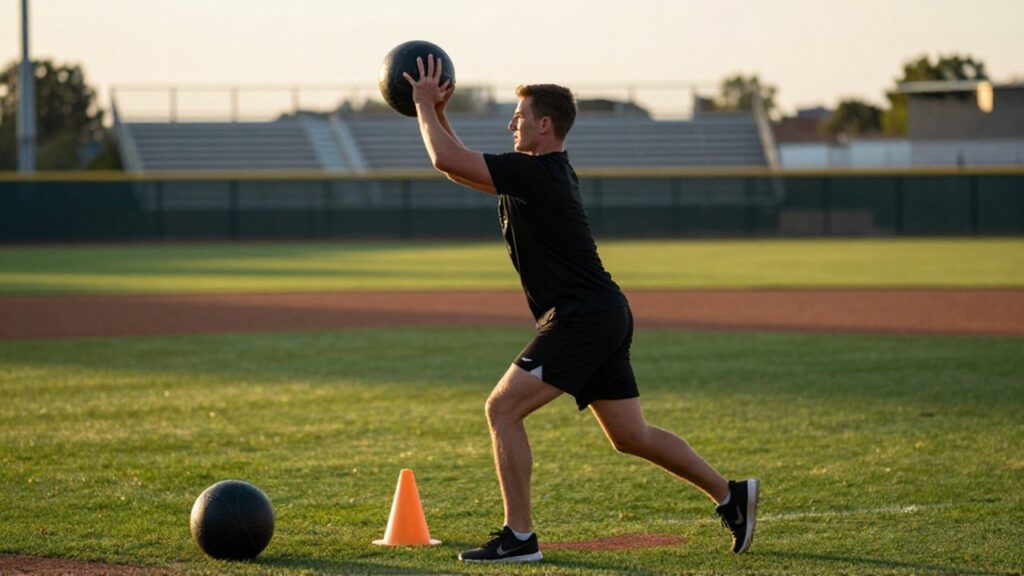
Pitching speed is one of the most sought-after attributes in modern baseball, serving as a primary tool for dominating hitters and increasing strikeout rates. Training for velocity is not merely about throwing harder; it is a complex discipline that requires a combination of explosive power, mechanical efficiency, and physical conditioning. When executed correctly, velocity training allows a pitcher to maximize the kinetic energy generated from the ground up through the entire body.
This training is most appropriate for pitchers looking to transition from amateur to professional levels or those seeking to break through a performance plateau. It is essential to understand that increasing speed must be balanced with arm care and technical precision to prevent injury. A structured approach focusing on strength, explosive movements, and biomechanics is the most effective way to develop a more powerful fastball.
Importance of kinetic chain efficiency
To increase pitching speed, a player must understand the kinetic chain, which is the sequential activation of body segments to transfer energy. The process begins with the legs and hips, moves through the torso, and finally reaches the arm. If there is a "leak" in this chain—such as weak core stability or poor hip mobility—energy is lost, and the pitcher must rely solely on their arm to generate velocity, which increases the risk of injury.
Training for speed involves optimizing how these segments interact. A pitcher with high explosive power in their lower body and a stable core can transfer more force into the ball. Without this efficiency, even the strongest athlete will struggle to reach their maximum velocity potential because the energy is not being channeled effectively toward the target.
Lower body explosive power exercises
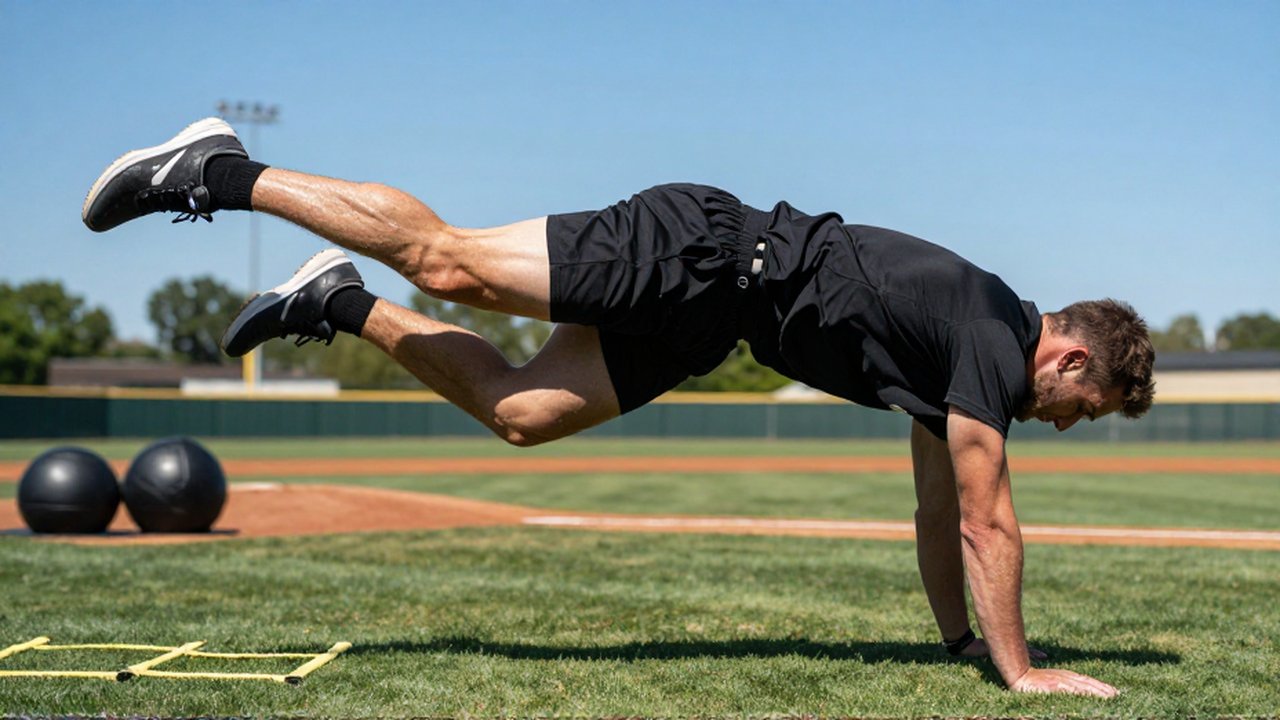
The foundation of every high-velocity pitch is built in the legs. Power starts with the ability to push off the rubber and drive toward the plate.
- Squats and Deadlifts: These foundational movements build the raw strength necessary to stabilize the body during the high-force demands of a pitching motion.
- Plyometric Jumps: Exercises like box jumps or lateral bounds train the fast-twitch muscle fibers. This teaches the legs to produce force rapidly, which is crucial for the drive phase of the delivery.
- Lunges: Single-leg stability is vital because pitching is essentially a series of explosive movements performed from a staggered, unstable position. Lunges help build the unilateral strength required to maintain balance during the stride.
Core stability for force transfer
The core acts as the bridge between the lower body and the upper body. A strong, stable core prevents energy dissipation during the rotation of the torso.
- Rotational Medicine Ball Throws: These exercises mimic the rotational mechanics of pitching. By throwing a weighted ball against a wall using a twisting motion, pitchers develop the ability to rotate the hips and torso explosively.
- Planks and Side Planks: Stability is just as important as rotation. These exercises ensure that the spine remains protected and that the torso can resist unwanted lateral movements during the delivery.
- Russian Twists: This movement targets the obliques, which are the primary muscles used to accelerate the torso during the deceleration and rotation phases of the pitch.
Upper body and arm conditioning
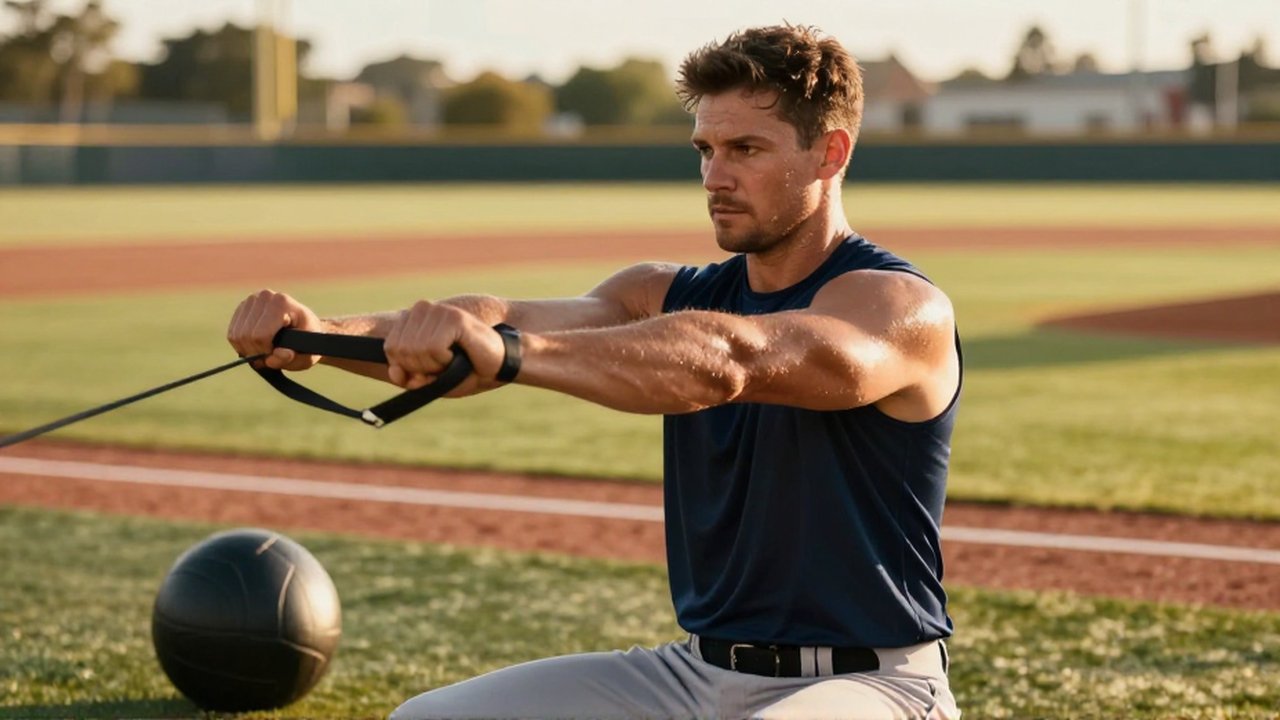
While the power comes from the legs and core, the arm is the final link in the chain. Conditioning the upper body should focus on stability and deceleration rather than just raw strength.
- Scapular Stability Exercises: Using resistance bands to perform movements like "YTWLs" helps strengthen the muscles around the shoulder blade. A stable scapula provides a solid base for the arm to move.
- Rotator Cuff Strengthening: Small, controlled movements with light resistance help maintain the health of the muscles that stabilize the shoulder joint.
- Plyometric Push-ups: These can help develop explosive pushing power, though they should be integrated cautiously to avoid overstraining the shoulder joints.
Common training mistakes to avoid
Many pitchers make the mistake of focusing exclusively on throwing maximum-effort bullpens. This "volume-only" approach often leads to fatigue and decreased mechanics, which ultimately slows down velocity and increases injury risk.
Another frequent error is neglecting the importance of deceleration. When a pitcher throws a ball, the body must also be able to safely slow down the arm after the release. If the posterior chain and the muscles of the back are weak, the shoulder joint absorbs too much of the braking force. Furthermore, attempting to gain speed without addressing mobility issues in the hips and thoracic spine can lead to compensatory movements that ruin a pitcher's command.
Frequently Asked Questions
Can I increase my velocity just by throwing more balls? No. Velocity is a product of power, mechanics, and efficiency. Simply increasing the number of pitches thrown often leads to fatigue and poor form, which can actually decrease speed and cause injury.
How often should I perform explosive training? Explosive and plyometric training should be done with high intensity but relatively low frequency. This allows the central nervous system and muscle tissues enough time to recover between sessions.
Does lifting heavy weights make me slow? Not if the training is programmed correctly. The goal is to convert raw strength into power (force multiplied by speed). Strength training provides the foundation, while plyometrics and rotational work teach the body to use that strength quickly.
Is flexibility important for pitching speed? Yes. Proper mobility in the hips and the upper back (thoracic spine) allows for a longer stride and a more efficient rotational arc, both of which contribute to higher velocity.
Leave a Reply