How to improve core strength for better stability

Introduction
Core strength is the foundation of all human movement, serving as the central link that connects your upper and lower body. While many people mistakenly associate the "core" only with visible abdominal muscles, it actually encompasses a complex network of muscles including the rectus abdominis, obliques, transverse abdominis, and the muscles supporting the lower back and pelvis. Developing this area is essential because a strong core acts as a stabilizer, protecting the spine and allowing for more efficient energy transfer during physical activities.
Improving your core stability is vital for anyone looking to enhance athletic performance or prevent everyday injuries. Whether you are a runner seeking better posture, a weightlifter requiring a rigid torso for heavy lifts, or simply someone wanting to avoid back pain during daily chores, a functional core is your primary defense. When the core is weak, the body compensates by using other muscle groups inefficiently, often leading to joint strain and instability.
By focusing on targeted exercises that emphasize stability rather than just movement, you can build a resilient midsection. This process involves training the muscles to resist unwanted motion and maintain a neutral spine under various conditions. Systematic training not only improves balance but also optimizes the way your body handles external loads and internal forces.
Importance of core stability in movement

Stability is the ability of the body to maintain control over its center of gravity. In the context of the core, this means your trunk remains steady while your limbs move, or stays steady while an external force tries to move it. This concept is crucial because most athletic movements—such as swinging a baseball bat, sprinting, or even lifting a grocery bag—rely on a stable base to produce power.
Without a stable core, power "leaks" through the midsection. For example, if you attempt to throw a ball with a weak core, much of the force generated by your legs and torso is lost through a collapsing spine, resulting in a weaker throw and higher risk of injury. Therefore, training for stability is not just about aesthetics; it is about functional efficiency and structural integrity.
Effective exercises for core development
To build true stability, training should move beyond traditional sit-ups. While crunches engage the abdominal muscles, they often prioritize spinal flexion rather than stabilization. To achieve better balance and strength, incorporate exercises that challenge your ability to resist movement.
Isometric holds and anti-movement exercises
- Planks: These are fundamental for teaching the body to maintain a rigid line from head to heels. They engage the entire trunk and help improve endurance in the stabilizing muscles.
- Side Planks: These focus heavily on the obliques and the lateral stabilizers of the spine, which are essential for preventing side-to-side instability.
- Bird-Dog: By extending opposite limbs while maintaining a neutral spine, you train the body to stabilize the lower back and improve coordination between the core and the extremities.
- Dead Bug: This exercise emphasizes keeping the lower back pressed against the floor while moving the limbs, teaching the core to stabilize the spine against the movement of the legs and arms.
Dynamic stability and loaded movements
Once you have mastered basic holds, adding movement or external weight can further challenge the system. Carrying heavy weights in one hand (suitcase carries) forces the opposite side of the core to work harder to keep the torso upright. Similarly, movements that require you to balance on one leg or on an unstable surface can trigger faster neuromuscular responses, training the core to react to sudden shifts in balance.
Common mistakes in core training
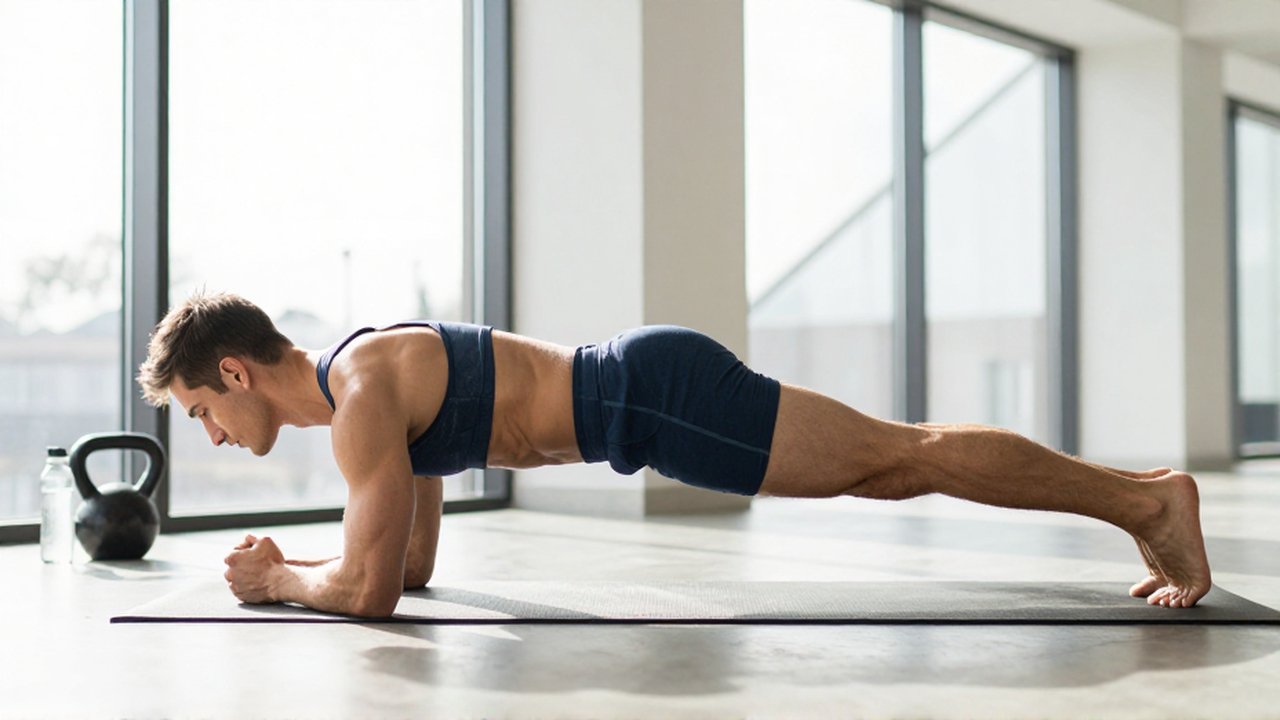
One of the most frequent errors in core training is prioritizing quantity over quality. Doing hundreds of repetitions with poor form is less effective and potentially harmful than doing ten repetitions with perfect control. If the lower back begins to arch or the hips sag during a plank, the core has likely fatigued, and the load is being transferred to the spine.
Another mistake is neglecting the posterior chain. Many people focus exclusively on the "six-pack" muscles at the front of the abdomen while ignoring the erector spinae and glutes. A truly stable core requires a balance between the anterior (front) and posterior (back) sides. If one side is significantly weaker than the other, it creates an imbalance that can lead to postural issues and chronic pain.
Principles for a consistent routine
To see measurable improvements in stability, apply the principle of progressive overload. This does not always mean adding more weight; it can mean increasing the duration of a hold, reducing the time allowed for rest, or moving to a more difficult variation of an exercise.
| Training Goal | Focus Area | Example Method |
|---|---|---|
| Endurance | Sustained tension | Longer plank durations |
| Anti-Rotation | Resisting twisting | Pallof presses |
| Anti-Extension | Preventing back arching | Hollow body holds |
| Anti-Lateral Flexion | Resisting side bending | Weighted carries |
Consistency is more important than intensity. Training the core two to three times a week with focused, controlled movements is generally more effective for long-term stability than one intense session that leaves you unable to move the following day.
Frequently asked questions
How long does it take to feel the benefits of core training? While neurological adaptations (improved coordination and balance) can be felt relatively quickly, structural strength and stability benefits usually become apparent after several weeks of consistent training.
Can I improve core stability without equipment? Yes, many of the most effective stability exercises, such as planks, bird-dogs, and dead bugs, require nothing more than your own body weight and a flat surface.
Is core strength the same as having visible abs? No. Visible abdominal muscles are primarily a result of low body fat percentages, whereas core strength and stability refer to the functional ability of the muscles to support the spine and control movement.
Should I train my core every day? Because the core muscles are used in almost every movement, they need adequate recovery just like any other muscle group. Training them 3 to 4 times a week allows for sufficient stimulation and repair.
Leave a Reply